If your faucets suddenly spit, sputter, or release bursts of air before the water flows normally, air is entering or moving through your water system somewhere.
An occasional burst after plumbing work or a temporary interruption may clear on its own. Repeated sputtering is different. In a private well system, persistent air can be associated with the pump, well water level, piping, pressure equipment, or another condition that deserves investigation.
The key is figuring out when the air appears and what else happens at the same time.
✅ Start With the Pattern
Before assuming anything has failed, notice how the problem behaves.
Ask yourself:
- Does it happen at every faucet?
- Is it only on the hot-water side?
- Did it begin suddenly?
- Is your water pressure also weaker?
- Does it become worse after heavy water use?
- Has your pump started running differently?
- Does the water look cloudy but clear after sitting?
These details can narrow the problem considerably.
Air at One Faucet vs. Throughout the House
Where you experience the problem matters.
Only one fixture sputters
If every other fixture operates normally, the issue may be isolated to that faucet or a nearby section of household plumbing rather than the well system.
Multiple fixtures sputter
When faucets throughout the house release air, the source is more likely to be somewhere in the main water-supply system.
That doesn’t automatically mean the well pump is failing, but it gives troubleshooting a much better starting point.
1. The Well Water Level May Be Affecting Pump Operation
A well pump is designed to move water, not repeatedly draw air into the system.
If conditions allow air to enter while the pump is operating, that air can eventually travel through the pressure system and appear at household fixtures.
One possible reason is inadequate water availability around the pump or intake.
You may notice:
- Air at several faucets
- Reduced water flow
- Pressure that changes during use
- Problems that become more noticeable during periods of higher demand
These symptoms don’t prove that a well is “running dry.” Water availability and pump placement need to be evaluated before reaching that conclusion.
2. A Leak Can Allow Air Into Certain Well Systems
Some well configurations rely on suction to bring water toward an above-ground pump.
A problem on the suction side can allow air into the system even without producing an obvious water leak.
That creates a situation homeowners sometimes find confusing:
There may be no visible puddle, yet air is still getting into the water line.
Depending on the system, this can also contribute to difficulty maintaining prime or inconsistent pump performance.
3. A Jet Pump May Be Losing Prime
Jet pump systems require the suction side to remain properly filled with water.
If the system loses prime, the pump may struggle to draw water correctly and air can become part of the problem.
Simply restoring prime doesn’t necessarily identify the cause.
If the condition repeatedly returns, the better question is:
Why is the system losing prime in the first place?
A leak, valve problem, piping issue, or another system condition may need to be addressed.
4. Pump or Piping Problems Can Affect Water Delivery
Problems involving the pump or piping can create unusual flow behavior that homeowners experience as sputtering, inconsistent pressure, or interrupted water delivery.
This becomes more significant when air appears together with:
- A pump running longer than normal
- Loss of pressure
- Intermittent water
- Unusual pump noises
- Complete loss of water followed by temporary recovery
Instead of treating the air as an isolated symptom, look at what the entire well system is doing.
5. Recent Plumbing Work Can Temporarily Introduce Air
Not every sputtering faucet indicates a well failure.
If the water was recently shut off for plumbing repairs, equipment replacement, or other work, air can become trapped in the plumbing.
When service is restored, faucets may sputter temporarily while that air leaves the lines.
The important distinction is whether the problem clears and stays gone.
If air repeatedly returns without recent plumbing work or a known interruption, another source should be investigated.
6. Cloudy Water Isn’t Always the Same as Air Entering the Well System
Sometimes homeowners describe their water as “full of air” because it looks milky or cloudy when it first leaves the faucet.
A useful observation is to fill a clear glass and let it sit.
If the cloudiness is caused by tiny air bubbles, you may see the water gradually become clear as the bubbles escape.
That observation can help distinguish entrained air from sediment or discoloration, but it doesn’t determine why excess air is present.
If the water remains discolored or contains visible particles, you’re dealing with a different symptom that may require separate investigation.
✅ What If the Air Appears Only in Hot Water?
This is an important distinction.
If cold water flows normally but the problem occurs only when using hot water, the well itself may not be the best place to begin troubleshooting.
The issue may instead involve the home’s water-heating or hot-water plumbing system.
Checking both hot and cold water at several fixtures can therefore prevent unnecessary work on the well equipment.
Air in the Lines + Low Water Pressure
Air becomes more diagnostically useful when combined with another symptom.
For example:
Air + normal pressure: may point troubleshooting in one direction.
Air + declining pressure: suggests the water-delivery system deserves closer evaluation.
Air + pump running continuously: raises questions about whether the pump is receiving and moving adequate water.
Air + intermittent loss of water: makes water availability, pump operation, and piping particularly important to investigate.
No single combination provides a guaranteed diagnosis, but the pattern helps narrow the possibilities.
What Can a Homeowner Safely Check?
You don’t need to open the well or electrical equipment.
Instead, gather information.
Test several fixtures
Determine whether the problem is isolated or house-wide.
Compare hot and cold water
This can help distinguish a whole-house supply problem from something associated with the hot-water system.
Observe water pressure
Note whether pressure remains normal, fluctuates, or has gradually weakened.
Pay attention to pump behavior
Does the pump run normally?
Does it run much longer than before?
Does it start and stop frequently?
Think about when the problem began
Recent plumbing work, a temporary water interruption, or a sudden change in well-system performance can provide useful context.
These observations are often more valuable than attempting random adjustments.
❌ Don’t Immediately Assume the Well Is Dry
Air from faucets can certainly occur alongside inadequate water availability, but that isn’t the only possible explanation.
Declaring that a well has “gone dry” based solely on sputtering can lead to the wrong repair decision.
The system needs to answer several questions:
- Is adequate water available?
- Is the pump moving it correctly?
- Is air entering through the piping or pumping system?
- Can the system build and maintain normal pressure?
Only then does the appropriate solution become clear.
When Should You Have the Well System Checked?
Persistent air deserves attention when it occurs without an obvious temporary explanation, especially when accompanied by changes in system performance.
Arrange an evaluation if you notice:
- Air repeatedly returning at multiple faucets
- Declining water pressure
- Intermittent loss of water
- A pump running unusually long
- Difficulty maintaining normal pressure
- New or unusual pump behavior
Galan Well Drilling & Pump Inc. can diagnose the complete system
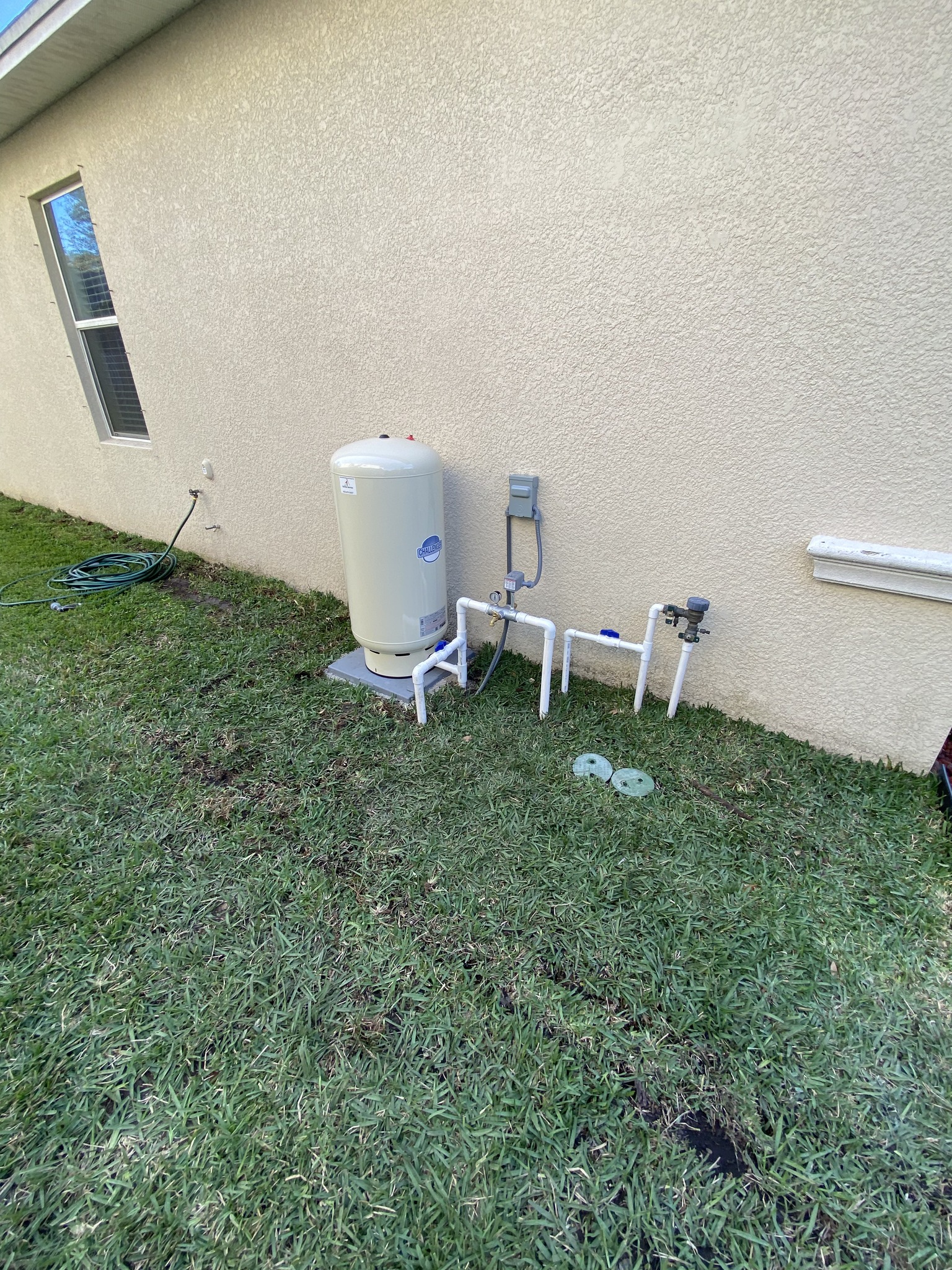
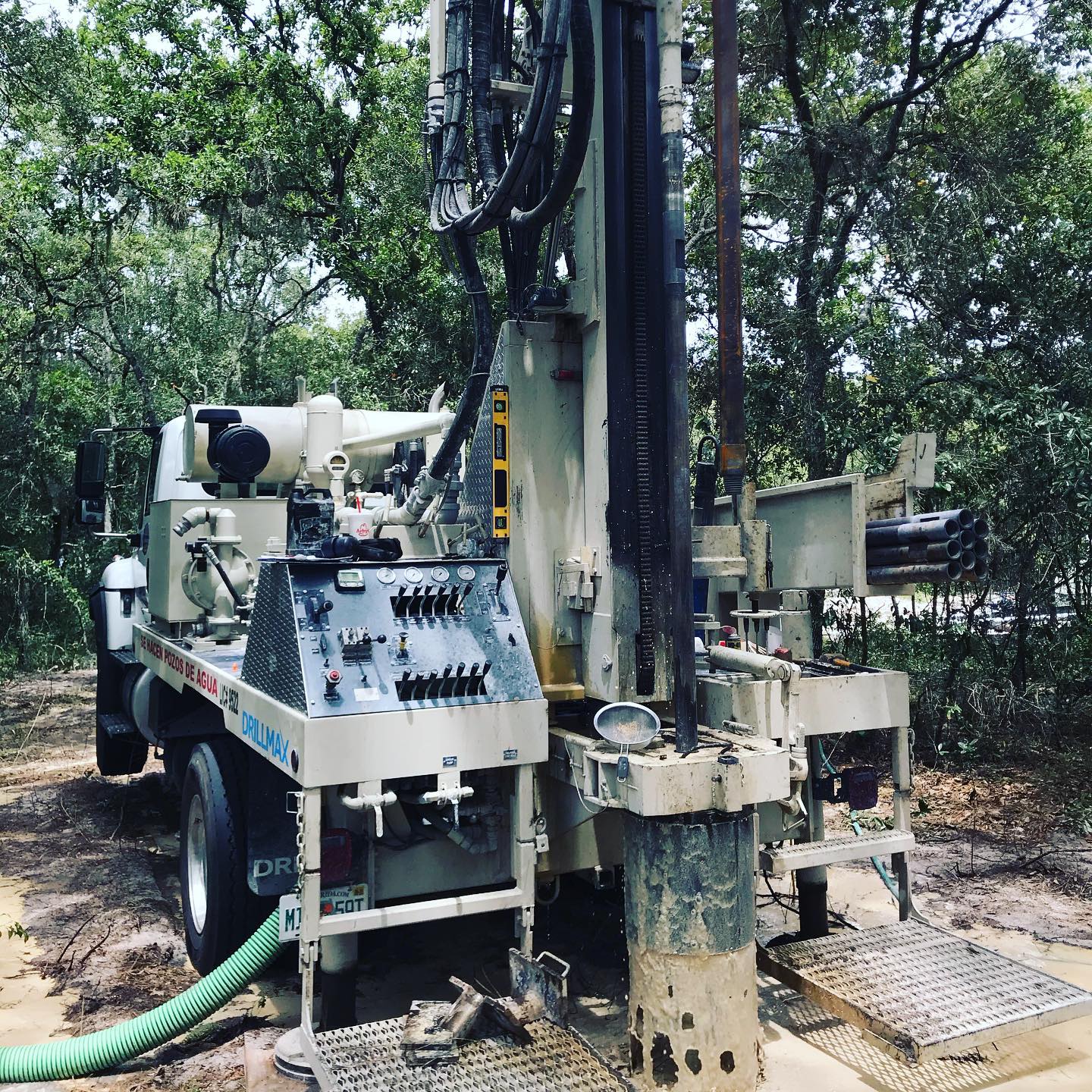
If sputtering faucets are accompanied by pressure or water-delivery problems, Galan Well Drilling & Pump Inc. can evaluate the pump, well, pressure system, and related components to determine where the problem originates before recommending a repair.
What a Professional Is Trying to Determine
The goal isn’t simply to “remove the air.”
It’s to find out how it got there.
Depending on the well system and symptoms, diagnosis may focus on:
- Pump operation
- Water availability
- Pressure behavior
- Applicable suction piping
- Loss of prime
- Piping and connections
- Pressure-system performance
Finding the source matters because temporarily clearing air from household plumbing won’t solve a condition that keeps introducing it.
✅ The Bottom Line
Persistent air in well water lines is a symptom, not a diagnosis.
It may be associated with water availability, pump operation, a suction-side leak on applicable systems, loss of prime, piping problems, or a temporary interruption that introduced air into the plumbing.
Start by determining whether the problem affects the whole house, whether it occurs on both hot and cold water, and whether pressure or pump behavior has changed.
If the sputtering keeps returning, diagnose the source rather than repeatedly trying to clear the lines.
Frequently Asked Questions
Why is my well water suddenly sputtering?
Air has entered or become trapped in the water system. If there hasn’t been recent plumbing work or a temporary water interruption, the well, pump, piping, and pressure system may need to be evaluated.
Does air from my faucets mean my well is running dry?
Not necessarily. Inadequate water availability is one possibility, but piping problems, loss of prime on applicable systems, pump issues, and temporary trapped air can produce similar symptoms.
Why does my faucet spit air only when I use hot water?
If cold water throughout the house operates normally, investigate the hot-water system before assuming the well is responsible.
Can a leak cause air in well water lines?
Yes, depending on the type and location of the leak. In systems that use suction piping, air can potentially enter without creating an obvious visible water leak.
Will air in the water lines eventually go away?
Air introduced during plumbing work or a temporary shutdown may clear as the system is used. Air that repeatedly returns suggests an underlying cause may still be present.
Should I replace my well pump if my faucets are sputtering?
Not based on sputtering alone. Pump performance is one possible factor, but the well, piping, pressure system, and water availability should be considered before deciding that pump replacement is necessary.