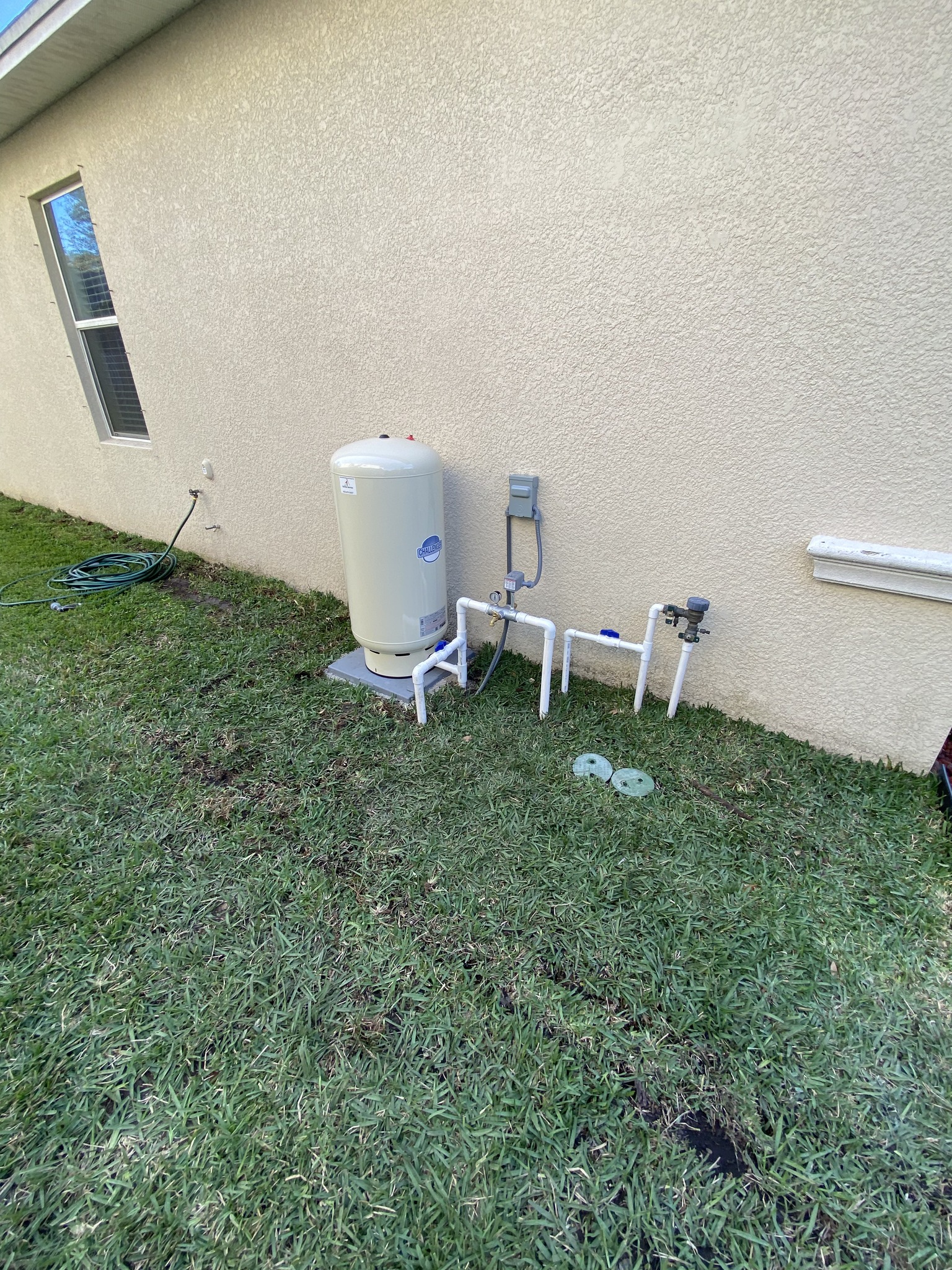
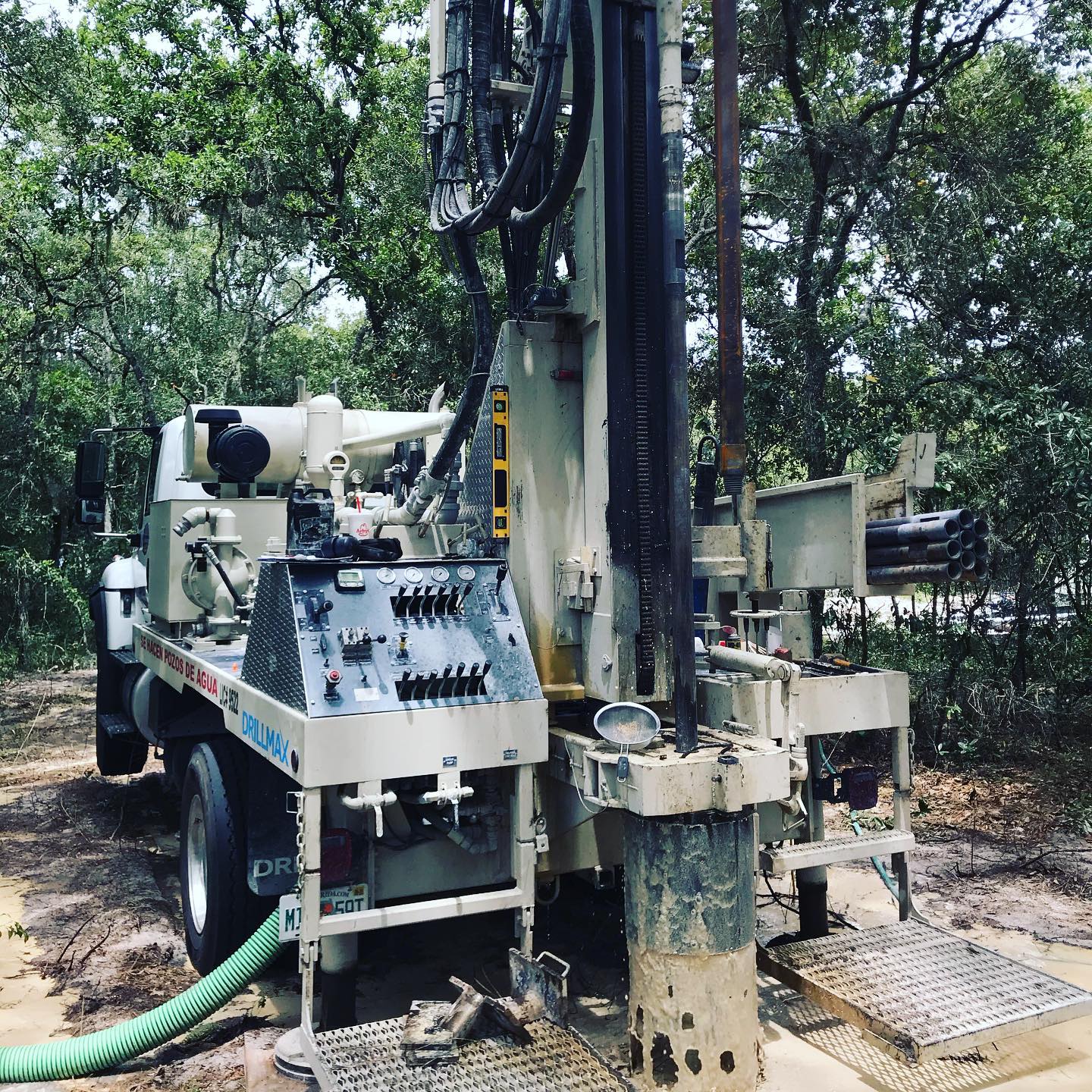
If your home suddenly has weak water pressure, sputtering faucets, or periods when the water stops altogether, you may wonder whether your well is running dry.
It’s possible—but those symptoms don’t prove it.
A pump problem, leaking pipe, pressure-system failure, electrical issue, or another well-system problem can produce similar symptoms. The important question is whether the well is actually providing water fast enough to meet the demand placed on it.
✅ What Does “Running Dry” Actually Mean?
Homeowners often use “dry well” to describe any situation where the faucets stop producing water.
That’s not necessarily what is happening underground.
A well can experience inadequate water availability without being permanently dry. The water level may be too low for the existing pump configuration, or the well may not be recovering quickly enough to keep up with household demand.
That distinction matters.
If the problem is the pump, replacing or repairing the pump may restore normal service.
If the problem is water availability within the well, replacing a functioning pump alone doesn’t address the underlying condition.
1. Water Pressure Becomes Weak During Extended Use
One useful clue is when the pressure problem occurs.
Suppose water pressure seems normal when you first begin using water but gradually weakens during a long shower, irrigation cycle, or other sustained demand.
Then, after the system sits unused for a while, water service improves again.
That pattern can be consistent with a well that isn’t supplying water as quickly as it’s being used.
But it isn’t conclusive. Pump performance and other system problems can create similar behavior, so the complete system still needs to be evaluated.
2. Water Stops and Later Returns
This is another pattern worth paying attention to.
You use water normally.
Flow becomes weaker.
Eventually very little—or no—water comes from the fixtures.
After the well system has been left alone for some time, water becomes available again.
That recovery pattern can indicate that water is entering the well more slowly than the household is consuming it.
If this happens repeatedly, don’t simply adjust your routine around it. Determining why the system can’t consistently meet demand is more useful.
3. Faucets Begin Spitting Air
Sputtering fixtures can occur when air enters the water-delivery system.
If the symptom appears together with reduced water flow or intermittent loss of water, water availability becomes one of the conditions worth investigating.
However, air at faucets can also result from:
- Certain piping problems
- Loss of prime on applicable pump systems
- Recent plumbing work
- Other pump or water-delivery issues
So air in the lines does not automatically mean the well is dry.
The combination of symptoms matters more than any one symptom by itself.
4. The Pump Runs for an Unusually Long Time
A pump normally operates until the system reaches the pressure needed for it to shut off.
If the pump runs continuously or considerably longer than it used to, one possibility is that it isn’t receiving enough water to restore normal system pressure.
Other possibilities include:
- Reduced pump performance
- A significant leak
- Pressure-control problems
- Piping problems
A continuously running pump therefore tells you that something isn’t normal, but not necessarily what has failed.
5. The Problem Is Worse During High Water Demand
Timing can reveal useful information.
Consider a home where ordinary handwashing causes no noticeable problem, but running several water-using fixtures or systems for an extended period leads to declining flow.
If water returns after demand stops, the well’s ability to supply water at the required rate may deserve investigation.
This is different from a home that has poor pressure at every fixture all day regardless of water usage.
Both homes have a water-delivery problem, but they may not have the same cause.
A “Dry Well” and a Low-Producing Well Aren’t Necessarily the Same Thing
This distinction is particularly important.
A well doesn’t need to contain absolutely no water for the household to experience water shortages.
Think of the system in terms of supply, recovery, and demand.
The well supplies stored groundwater to the pump.
Water enters or replenishes the well.
The household consumes water.
If household demand repeatedly exceeds what the well system can sustainably provide at that time, water service can become unreliable even though water is still present.
That is why diagnosing the well itself matters before concluding that it has permanently failed.
Well Problem or Pump Problem?
The symptoms can overlap considerably.
| What You Notice | Possible Areas to Investigate |
|---|---|
| Water weakens during extended use | Water availability, pump performance, system demand |
| Water disappears and later returns | Well recovery, pump operation |
| Pump runs but pressure doesn’t recover | Pump, water availability, leak, piping |
| Air appears at several faucets | Water availability, pump/piping system |
| Pressure is consistently weak | Pump, pressure system, piping, well conditions |
| Pump doesn’t operate at all | Electrical supply, controls, pump |
The table isn’t intended for self-diagnosis. Its purpose is to show why “I don’t have water” isn’t enough information to conclude that a new well is necessary.
✅ What Should You Do If You Think the Well Is Running Dry?
Start by reducing water use.
If water service is already becoming intermittent, continuing heavy demand isn’t useful for determining whether the system can recover.
Then document what happens.
Note when the problem occurs
Does it happen after several minutes of heavy water use or immediately?
Note whether water returns
If it does, approximately how long was the system unused before service returned?
Observe the pump
Does it continue running while water flow decreases?
Check multiple fixtures
Make sure you’re dealing with a whole-house supply problem rather than a single clogged or malfunctioning fixture.
Note other changes
Air, sediment, unusual noises, changing pressure, and changes in pump operation can all provide useful diagnostic clues.
You don’t need to diagnose the well yourself. You’re gathering information that helps a professional understand its behavior.
❌ Don’t Immediately Assume You Need a New Well
A complete loss of water understandably makes drilling a new well seem like the obvious conclusion.
But several other failures can stop water from reaching your home.
Before deciding that the well itself has failed, a professional should determine whether the problem involves:
- The pump
- Electrical controls
- Pressure equipment
- Piping
- Water availability
- The existing well
This can prevent an expensive decision based on the wrong diagnosis.
What Can a Well Professional Evaluate?
When inadequate water availability is suspected, the goal is to separate well performance from equipment performance.
The specific evaluation depends on the well and system, but the technician may need to determine:
Is water available to the pump?
Can the pump move that water effectively?
Does the system build and maintain pressure?
Does water delivery decline primarily during sustained demand?
Is another component creating symptoms that resemble inadequate well production?
Those answers determine what should happen next.
What If the Well Really Isn’t Providing Enough Water?
There isn’t one universal solution.
The appropriate response depends on the cause, condition of the existing well, pump configuration, water requirements of the property, and what an on-site evaluation reveals.
That’s precisely why diagnosing the problem before recommending equipment or drilling work matters.
Start with the existing system, not an assumption
If your water supply repeatedly weakens, disappears during normal use, or returns only after the system has been allowed to recover, Galan Well Drilling & Pump Inc. can evaluate the well and pumping system to determine whether the issue involves water availability, the pump, or another part of the system.
Can You Prevent a Well From Running Dry?
Not every change in groundwater availability or well performance is something a homeowner can prevent.
What you can do is recognize abnormal system behavior early.
Pay attention to:
- Gradually decreasing water delivery
- Longer pump run times
- Increasingly frequent periods of low pressure
- Air appearing at multiple faucets
- Water shortages during demand the system previously handled normally
A developing pattern tells you considerably more than a single brief pressure fluctuation.
✅ The Bottom Line
The strongest sign your well may be running dry isn’t one isolated symptom. It’s a pattern in which the system struggles to provide enough water, particularly during sustained demand, and may improve after being allowed time to recover.
Even then, don’t assume the well itself is the problem.
Pump failures, leaks, pressure-system problems, piping issues, and electrical faults can imitate some of the same symptoms.
The right first step is to determine whether the well is supplying enough water and whether the equipment is successfully delivering it.
Galan Well Drilling & Pump Inc. can evaluate both sides of that equation before recommending repair, pump work, or additional well services.
Frequently Asked Questions
How do I know if my well is actually running dry?
Repeated loss of water during sustained demand followed by recovery after the system rests can suggest inadequate water availability. It isn’t definitive, however, because pump and system failures can cause similar symptoms.
Will water come back if a well runs low?
Water may return if the issue involves the well’s ability to recover after demand. How the well behaves depends on its actual condition, so repeated water loss should be evaluated rather than treated as normal.
Does low water pressure mean my well is going dry?
Not necessarily. Low pressure can also result from pump, pressure tank, pressure-control, piping, and plumbing problems.
Does air in my faucets mean the water level is low?
It can occur alongside inadequate water availability, but air can enter a well system for other reasons. Sputtering alone isn’t enough to diagnose a low-producing well.
Should I turn off my pump if the well isn’t producing water?
A pump shouldn’t be allowed to operate indefinitely when it isn’t receiving or delivering adequate water. If you’re experiencing no water while the pump continues operating, arrange for the system to be evaluated promptly.
Do I need a new well if my existing well isn’t producing enough water?
Not necessarily. The cause and condition of the existing system need to be established first. A professional evaluation can determine whether the problem is actually the well or another part of the water-delivery system.